
What is insulin resistance?
Educational only: This page is for general education—not personal medical advice, diagnosis, or treatment. See a licensed clinician for your situation.
Short answer
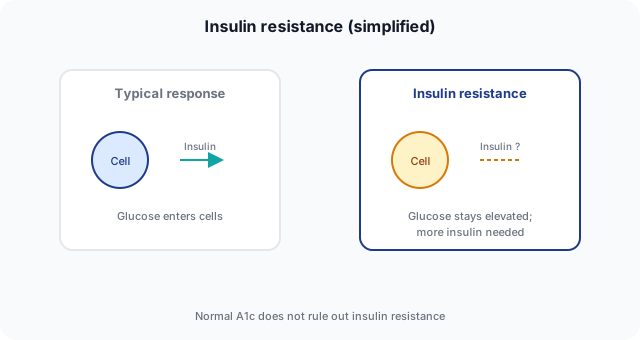
Insulin resistance means your cells respond less efficiently to insulin, so the pancreas often releases more insulin to keep blood sugar in range. It can exist for years before A1C rises into prediabetes or diabetes and is closely tied to excess visceral fat, weight gain, cravings, post-meal fatigue, and cardiometabolic risk. It is not the same as type 2 diabetes—though it is a major pathway toward it. Improvement usually combines sustained weight loss, activity, sleep, and clinician-guided care when indicated—not extreme restriction alone.
Mechanism in plain language
Think of insulin as a key that helps glucose enter cells. In insulin resistance, keys still exist but locks are stickier—so the pancreas makes more insulin (hyperinsulinemia) to compensate. Eventually glucose may rise into prediabetes or diabetes if compensation fails.
Visceral (abdominal) fat and sedentary patterns strongly associate with resistance in population studies. Genetics and family history also matter.
Signs and labs clinicians use
Symptoms are nonspecific: afternoon crashes, strong carb cravings, waist gain, and “normal labs” frustration. Standard screening uses fasting glucose, A1C, or oral glucose tolerance testing; fasting insulin may add context but is not routine everywhere and varies by lab.
Lipids, blood pressure, and waist trend help assess metabolic syndrome risk even when glucose looks acceptable.
Common misconceptions
- Myth: “Skinny people cannot be insulin resistant.” Reality: Lean individuals can have metabolic strain, especially with family history.
- Myth: “Normal A1C rules it out.” Reality: Compensatory hyperinsulinemia may precede A1C rise.
- Myth: “Keto fixes insulin resistance instantly.” Reality: Sustainable weight loss and activity have stronger trial evidence for prevention.
- Myth: “GLP-1 replaces lifestyle.” Reality: Medications help selected patients but require monitoring.
When to seek evaluation
Schedule care when waist size rises, post-meal fatigue is daily, or family history of diabetes is strong—even with normal screening labs. Urgent symptoms (polyuria, polydipsia, unexplained weight loss) need prompt glucose testing.
Telehealth can map metabolic history; local phlebotomy may be needed for labs.
Connecting insulin resistance to daily life
Desk workers often describe an afternoon crash after a large refined-carb lunch while morning fasting glucose still looks fine—that pattern prompts questions about glycemic variability and insulin surges, not only “eating too much.” See our Health Guide on brain fog after eating for the post-meal cluster.
Women in perimenopause may see rising triglycerides, waist circumference, and sleep disruption while routine labs remain “normal.” Men with central adiposity and snoring may have insulin resistance plus sleep apnea—treat sleep before assuming hormones alone explain fatigue.
Coordinating medical care (educational)
Metabolic care should connect labs, sleep, and nutrition—not single biomarkers.
Before discussing Metabolic care should connect labs, sleep, and nutrition—not single biomarkers., bring a two-week food and energy log, recent labs if you have them, a full medication and supplement list, and your top three goals for the next three months—those details help a clinician interpret cravings, GI symptoms, and metabolic risk without guessing.
If Metabolic care should connect labs, sleep, and nutrition—not single biomarkers. still leaves fatigue, cravings, or post-meal fog unexplained after “normal” labs, ask what was not measured (fasting insulin patterns, waist trend, sleep apnea screening, medication timing) rather than assuming nothing is wrong.
Educational content cannot promise a specific weight outcome; plans follow FDA indications, monitoring, and individual tolerability.
Key takeaways
- Insulin resistance is a trajectory—not a single lab value.
- Roughly 5–7% weight loss improves sensitivity in many high-risk adults (DPP).
- Sleep apnea and ADHD-related eating patterns often overlap—treat holistically.
For “What is insulin resistance,” do fatigue, cravings, or weight change persist despite “normal” screening labs?
Yes → For “What is insulin resistance,” discuss metabolic labs, sleep history, and nutrition patterns with a clinician.
No → For “What is insulin resistance,” continue lifestyle structure; recheck if symptoms escalate.
While exploring “What is insulin resistance,” chest pain, stroke signs, or severe confusion?
Yes → Call 911 or go to emergency care.
Evidence & references
- ADA Standards of Care in Diabetes—2025 (prediabetes, lifestyle)
- Diabetes Prevention Program (NEJM 2002; PMID 12023865)
- IDF metabolic syndrome criteria
- Visceral adipose tissue and insulin resistance literature (Sci Rep themes)
What to do with this answer
If this guide clarified a metabolic or weight question (“What is insulin resistance?”), use it as orientation—not a diagnosis. The core takeaway stays the same: Insulin resistance means your cells respond less efficiently to insulin, so the pancreas often releases more i…
For “What is insulin resistance?,” a practical next path is assessment → labs when indicated → a monitored plan. For related reading, see insulin resistance without diabetes and normal a1c insulin resistance.
Browse all Health Guides · Weight loss articles