
Start with the summary—educational, not personal advice.
What are the signs of adult ADHD?
Educational only: This page is for general education—not personal medical advice, diagnosis, or treatment. See a licensed clinician for your situation.
Short answer
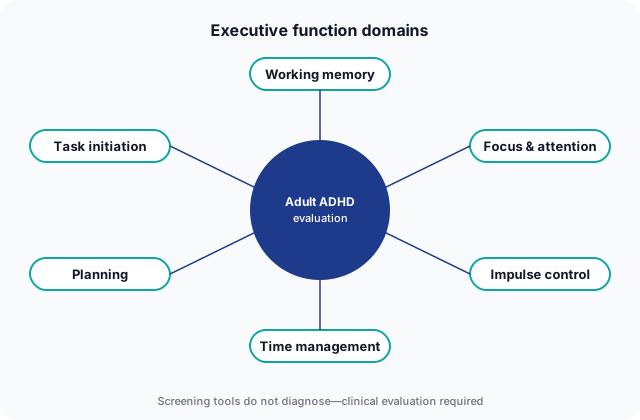
Adult ADHD often shows up as chronic difficulty sustaining focus, disorganization, forgetfulness, time blindness, trouble finishing tasks, inner restlessness, and emotional sensitivity—not only childhood-style hyperactivity. Symptoms must cause real impairment in work, relationships, or daily life and usually reflect lifelong patterns, though many adults were never diagnosed. Clinicians rule out sleep apnea, anxiety, depression, thyroid disease, and iron deficiency before confirming ADHD.
-
1
Short answer
-
2
Sections
Read vignette & decision support for your situation.
-
3
Evidence card
Guideline anchors before the reference list.
-
4
Next step
Related guides — Start Secure Medical Chat when ready.
Core signs clinicians assess
Inattentive presentation is common in adults: mental fog, losing track of conversations, missed deadlines, and piles of unfinished projects. Hyperactivity may appear as inner restlessness or difficulty relaxing rather than running in classrooms.
Executive dysfunction—planning, prioritizing, initiating boring tasks—often hurts careers despite high intelligence. Emotional dysregulation and rejection sensitivity are frequently reported even though RSD is not a standalone DSM diagnosis.
Common misconceptions
- Myth: “ADHD is a childhood-only disorder.” Reality: Many adults are diagnosed late after compensation fails.
- Myth: “An online quiz is enough.” Reality: Screeners prompt evaluation; they do not diagnose.
- Myth: “Successful people cannot have ADHD.” Reality: High-functioning compensation is common.
- Myth: “Stimulants are the only treatment.” Reality: Skills, sleep, therapy, and non-stimulants matter.
When to seek evaluation
Book structured ADHD evaluation when symptoms impair functioning most weeks—not only during one stressful project. Seek urgent care for suicidal thoughts or safety crises.
Siya Health offers a 60–90 minute adult ADHD telehealth evaluation in eligible states; bring childhood examples and sleep history to the visit.
When signs prompt formal evaluation
Adults often seek evaluation after job loss, divorce, or new parenting when old coping systems fail. Bring specific examples: taxes late three years running, chronic parking tickets, or partners describing “listening but not hearing.”
Women frequently report years of mislabeled anxiety or depression; inattentive ADHD without hyperactivity is easily missed. Perimenopause can worsen executive function—still screen for ADHD history rather than attributing everything to hormones alone.
Coordinating medical care (educational)
Symptom lists on this page support—but do not replace—structured evaluation.
Before discussing Symptom lists on this page support—but do not replace—structured evaluation., document your symptom timeline (childhood vs adult onset, settings affected, best and worst weeks), sleep partners’ observations about snoring, medications and supplements, and three-month goals—those details speed responsible evaluation more than another online quiz.
If Symptom lists on this page support—but do not replace—structured evaluation. still leaves you impaired after “normal” screening, ask what was not measured (sleep testing, ferritin, thyroid, mood screening, full developmental history) rather than closing the chart.
Call 911 for emergencies. Telehealth improves access but does not replace in-person examination, sleep testing, or labs when clinically indicated.
Key takeaways
- Impairment across settings matters—not occasional bad weeks.
- Sleep and mood mimics must be screened.
- Legitimate telehealth evaluation beats social media checklists.
For “What are the signs of adult ADHD,” do symptoms impair work, relationships, or daily tasks most weeks?
Yes → For “What are the signs of adult ADHD,” consider structured ADHD evaluation—not online quizzes alone.
No → For “What are the signs of adult ADHD,” screen sleep, mood, and thyroid; revisit if worsening.
While exploring “What are the signs of adult ADHD,” are there urgent safety concerns (suicidal thoughts, chest pain, severe confusion)?
Yes → Seek emergency care now—not telehealth intake.
Evidence & references
- DSM-5-TR ADHD criteria
- NIMH adult ADHD overview
- CHADD adult resources
- ASRS screening instrument documentation
What to do with this answer
If this guide helped you name ADHD-related patterns (“What are the signs of adult ADHD?”), use it as orientation—not a diagnosis. The core takeaway stays the same: Adult ADHD often shows up as chronic difficulty sustaining focus, disorganization, forgetfulness, time blindne…
For “What are the signs of adult ADHD?,” a practical next path is screening → evaluation → treatment when appropriate. For related reading, see can adhd be diagnosed online and how long adhd evaluation.
Browse all Health Guides · ADHD articles