
What is food noise?
Educational only: This page is for general education—not personal medical advice, diagnosis, or treatment. See a licensed clinician for your situation.
Short answer
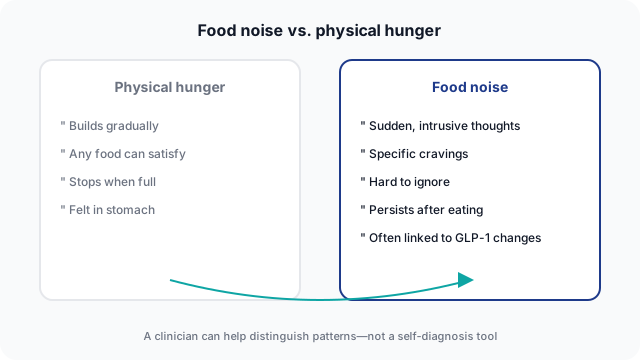
Food noise is persistent, intrusive thinking about food—planning meals, craving, or mental “background chatter” about eating—that can occur even when you are not physically hungry. It overlaps with hedonic eating and reward-circuit biology and is not the same as normal appetite after true energy need. GLP-1 receptor agonists may reduce food preoccupation for some people in trials, but response varies; sleep, ADHD impulsivity, insulin resistance, and emotional eating also belong in the clinical picture.
How patients and clinicians describe food noise
People contrast food noise with homeostatic hunger: “My stomach is not empty, but my brain will not stop negotiating food.” That exhaustion drives searches about GLP-1, ADHD, and metabolic health together.
Food noise is a patient-language concept—helpful for communication—not a standalone DSM diagnosis. Clinicians still assess binge patterns, eating disorders, depression, and medical causes.
Biology and overlapping conditions
GLP-1 medicines influence gut–brain satiety pathways; STEP trials report appetite-related outcomes alongside weight change. Effects are individual—not guaranteed.
ADHD-related impulsivity, poor sleep, and insulin resistance can amplify grazing and evening eating—coordinate care when multiple guides apply.
Common misconceptions
- Myth: “Food noise means weak willpower.” Reality: Neurobiology and environment matter.
- Myth: “GLP-1 silences food noise for everyone.” Reality: Partial or temporary response is common.
- Myth: “Quiet food thoughts prove health.” Reality: Over-restriction can also be unhealthy.
- Myth: “Only people with obesity have food noise.” Reality: Reported across BMI ranges.
When to seek evaluation
Discuss with a clinician when intrusive food thoughts impair quality of life, pair with binge eating, or coincide with metabolic symptoms. Eating disorder red flags deserve specialized care.
See our cornerstone blog for deeper GLP-1 and behavioral context; this Health Guide stays educational.
Behavioral and medical overlap
Reddit and patient communities describe food noise returning after GLP-1 dose gaps, during premenstrual weeks, or when sleep debt accumulates—those timelines help clinicians distinguish adherence issues from stress-driven hedonic eating.
ADHD adults may use food for stimulation during boring tasks; treating ADHD and improving task structure sometimes reduces grazing even without weight-loss medication. Eating disorder screening remains essential when loss of control, purging, or severe restriction is present.
Coordinating medical care (educational)
Food noise discussions should screen for eating disorders and metabolic comorbidity.
Before discussing Food noise discussions should screen for eating disorders and metabolic comorbidity., bring a two-week food and energy log, recent labs if you have them, a full medication and supplement list, and your top three goals for the next three months—those details help a clinician interpret cravings, GI symptoms, and metabolic risk without guessing.
If Food noise discussions should screen for eating disorders and metabolic comorbidity. still leaves fatigue, cravings, or post-meal fog unexplained after “normal” labs, ask what was not measured (fasting insulin patterns, waist trend, sleep apnea screening, medication timing) rather than assuming nothing is wrong.
Educational content cannot promise a specific weight outcome; plans follow FDA indications, monitoring, and individual tolerability.
Key takeaways
- Food noise ≠ normal hunger.
- Metabolic, sleep, and ADHD factors often overlap.
- GLP-1 is one tool—not a moral fix for eating.
For “What is food noise,” do fatigue, cravings, or weight change persist despite “normal” screening labs?
Yes → For “What is food noise,” discuss metabolic labs, sleep history, and nutrition patterns with a clinician.
No → For “What is food noise,” continue lifestyle structure; recheck if symptoms escalate.
While exploring “What is food noise,” chest pain, stroke signs, or severe confusion?
Yes → Call 911 or go to emergency care.
Evidence & references
- STEP trial appetite-related outcomes
- Hedonic eating and GLP-1 narrative reviews (2024–2025)
- Patient-reported food noise surveys (hypothesis-generating)
What to do with this answer
If this guide clarified a metabolic or weight question (“What is food noise?”), use it as orientation—not a diagnosis. The core takeaway stays the same: Food noise is persistent, intrusive thinking about food—planning meals, craving, or mental “background chatter…
For “What is food noise?,” a practical next path is assessment → labs when indicated → a monitored plan. For related reading, see what is insulin resistance and glp 1 side effects.
Browse all Health Guides · Weight loss articles